Würtenstadt
Digital Republic
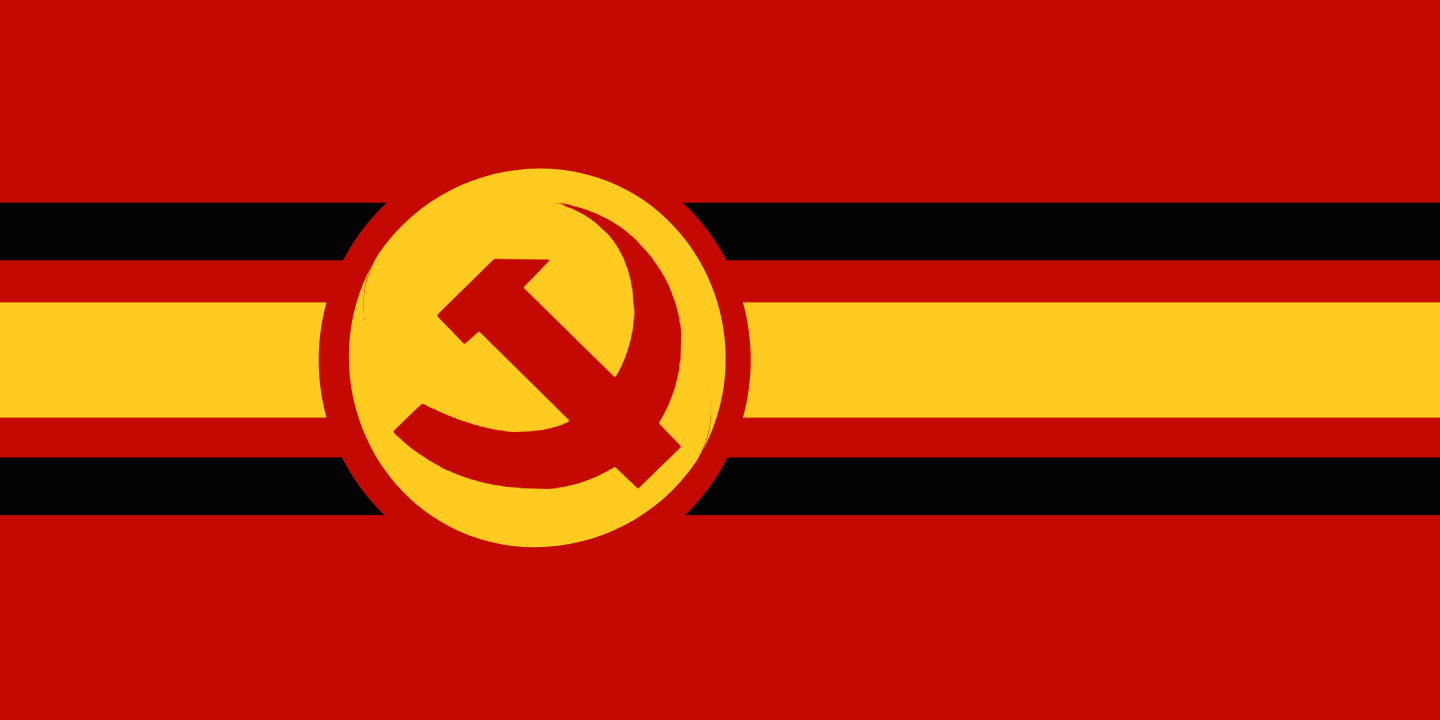
"All power to all people."
The Würtenstadt People’s Republic, in its current form, was established by the 2206 Constitution. Würtenstadt's history is long and filled with countless calamities, from the Kalmec Wars to the Great Suffering to nuclear war to the War on Amanita. Its history has been told. In the fifteen years since the War on Amanita, Würtenstadt has become a perversion of its former self. It would be unrecognizable to the now-deceased great leaders Klaus Muller and Abelina Fischer.
b
History
Origins and the Great Suffering
The Würtenstadt People’s Socialist Republic was founded in 1948 after the January Revolution, referred to as the Great Liberation in Würtenstadt, overthrew the monarchy of the Kingdom of Würtenstadt. Backed by leftist intellectuals and trade unions, the revolution established a generally democratic and egalitarian worker's republic that gradually backslid into an authoritarian one-party state during the troubles and conflicts of the Great Suffering.
The country was ruled by the Würtenstadt Socialist Unity Party (SEW). Real power was vested in the Politburo, led by General Secretary Klaus Müller. The rubber-stamp All-Würtenstadter People's Congress existed largely to formalize party decisions. Local governance was handled by Volksräte (People’s Councils), under tight surveillance from the Ministry of People’s Security. The WPSR was a centrally planned economy focused on industry and collectivized agriculture. The state controlled all production and distribution, providing universal employment, housing, and education. While consumer goods were limited, the regime promoted equality and self-sufficiency. A quiet but widespread black market supplemented daily life.
During the course of the Great Collapse, Würtenstadt attempted multiple socialist uprisings in other countries, most notably in the Eulban region of the Kalmec Union and in Eizonai. In both of these examples, the attempts backfired, with right-wing elements co-opting the resulting unrest to advance their own agendas. The attempted uprising in Eulba resulted in a Würtenstadter military intervention into Eulba, which escalated into a full-scale war between the Kalmecs and Würtenstadt that ended with a limited nuclear exchange.
Amanita, Nuclear War, & Collapse
As the Amanita crisis was in full swing, Würtenstadt broke up into